
Manhattan Bridge Running Route: The Local’s Guide (& Two-Bridge Loop)
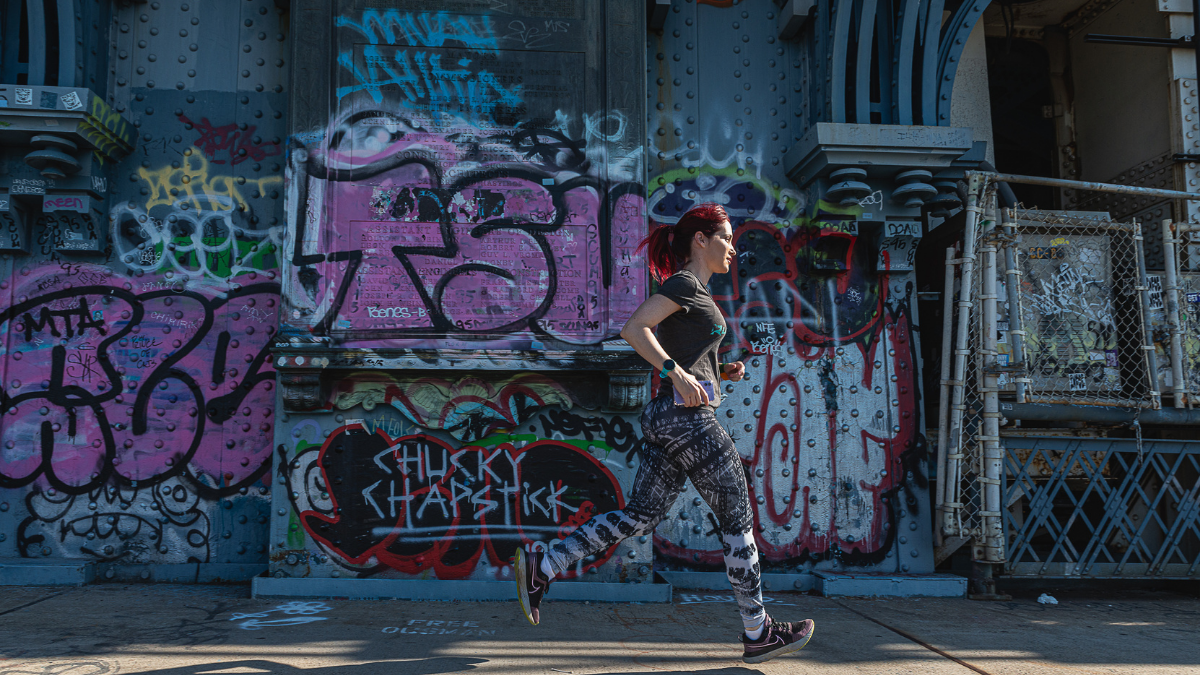
Photos by Marques Jackson Photography.
By Marnie Kunz
Runstreet founder and head coach
The Manhattan Bridge running route is one of my all-time favorite bridge runs in NYC. Often overlooked by tourists in favor of the nearby Brooklyn Bridge, the Manhattan Bridge offers iconic skyline views without the crowded foot traffic. Connecting DUMBO in Brooklyn to Manhattan’s Chinatown, it provides an excellent hill workout with scenic East River and skyline views, and an efficient way to log inter-borough miles.
After many years of running the Manhattan Bridge, from training for the NYC Marathon to run commuting to work in Soho, I’m sharing my complete running route review and key tips for adding Manhattan Bridge miles to your training.
Manhattan Bridge Quick Specs
- Distance: ~1.3 miles (one-way bridge crossing)
- Manhattan Entrance: Bowery & Canal St (South side walkway)
- Brooklyn Entrance: Jay St & Sands St (DUMBO)
- Surface: Concrete / Paved walkway
- Best For: Tempo runs, hill repeats, avoiding tourist crowds
Key Stats for NYC Runners
The Manhattan Bridge pedestrian path is about 1.3 miles (2.1 kilometers) connecting Manhattan and Brooklyn. The route runs along the south side of the bridge next to the B, D, N, and Q subway lines. There is a separate bike path on the north side of the bridge for cyclists, so the pedestrian path is dedicated to just walkers and runners, making it a safe, seamless option for training runs or commutes.
How the Manhattan Bridge Compares to the Brooklyn Bridge
The Manhattan Bridge and Brooklyn Bridge both connect DUMBO in Brooklyn to Lower Manhattan. You can see each bridge from the other, and both offer stunning views of the Lower Manhattan skyline.
There are some key differences between the two bridges, however:
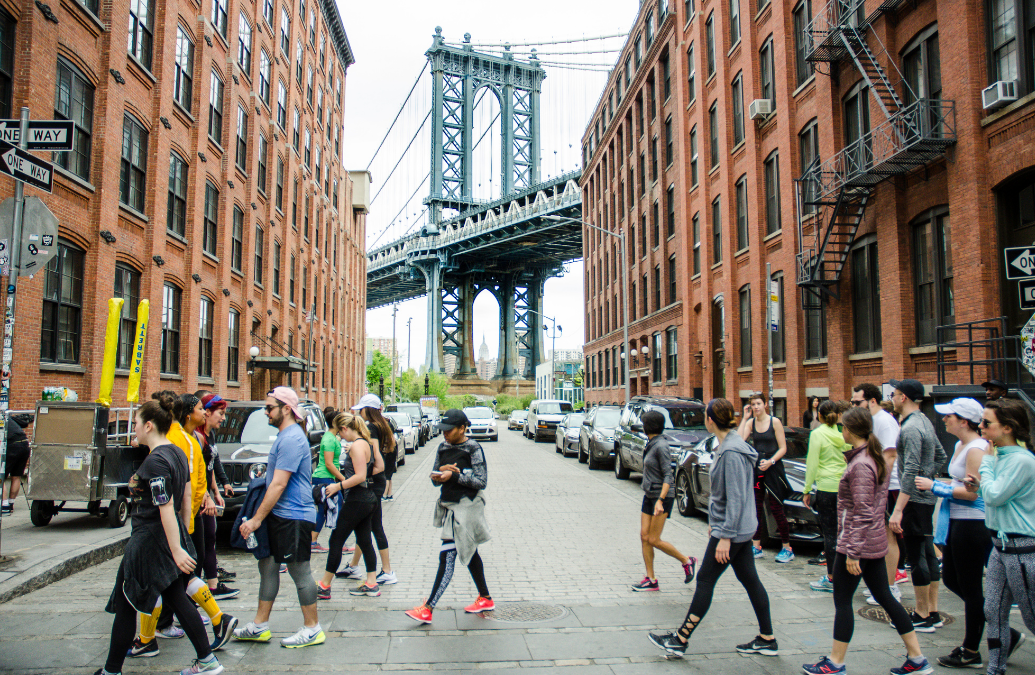
The Manhattan Bridge is a sought-after view in DUMBO, Brooklyn.
Architecture and Vibe: The Brooklyn Bridge is famous for its historic architecture and iconic wooden planks, making it a major tourist destination that often gets heavily crowded. (If you do want to run it, check out our complete DUMBO Running Tips & Brooklyn Bridge Guide for the best times to avoid the crowds). The Manhattan Bridge has a more gritty, industrial feel, complete with the rumble of subway trains, auto traffic, and local graffiti. Because of this, it is far more popular with locals using it as a practical route to commute, run, and bike between boroughs.
Surface and Elevation: The Manhattan Bridge features a paved cement surface with continuous inclines that climb steadily to the center before descending. In contrast, the Brooklyn Bridge has a smaller elevation gain and a flatter middle section.
Views and Photo Ops: Both bridges offer beautiful views. While the Manhattan Bridge pedestrian path has a chain-link safety fence along the walkway, there are several viewing cutouts strategically placed at key points so you can still snap unobstructed photos of the NYC skyline.
Manhattan Bridge Running Route Review
Manhattan Bridge Route Review
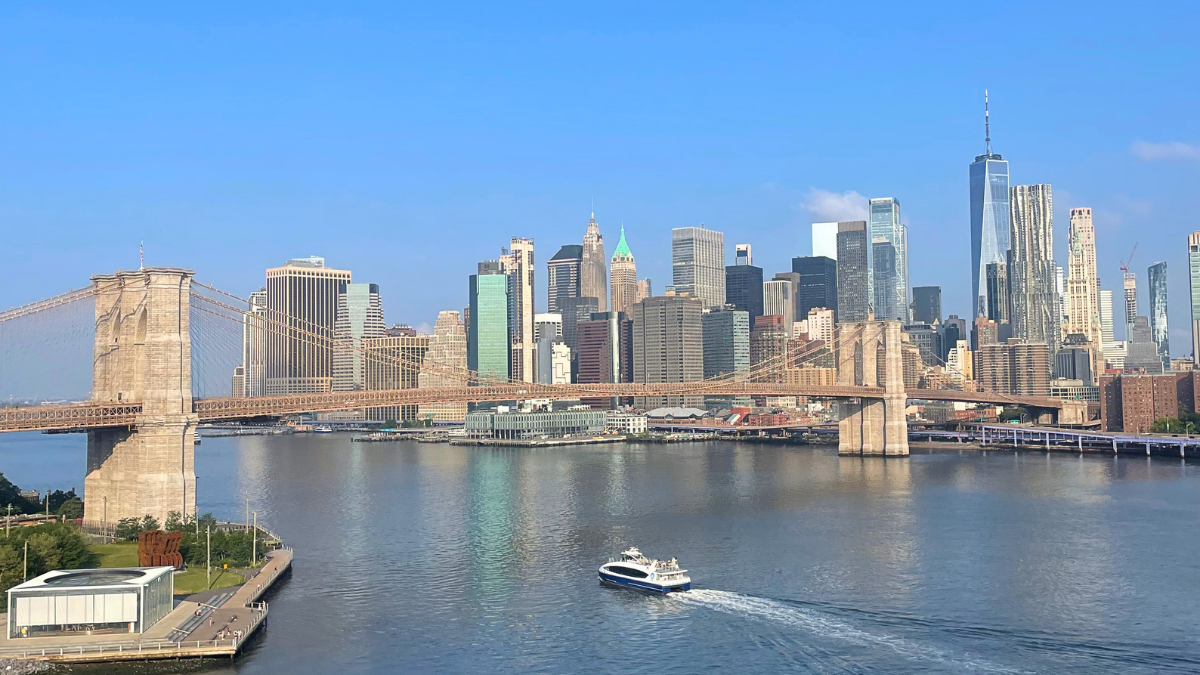
I took this photo on my phone when running on the Manhattan Bridge.
Scenery & Views: Lower East River & Skyline Perspectives
Running the Manhattan Bridge offers breathtaking views of Lower Manhattan, from the iconic steel skyscrapers in the Financial District to the graffiti-filled rooftops in Chinatown and the Lower East Side. As you run along the south side of the bridge, you’ll see DUMBO and the Brooklyn waterfront, as well as the stately Brooklyn Bridge. As you ascend toward the center span, the panoramic views of South Street Seaport, One World Trade Center, and the DUMBO waterfront only get better.
If you want a preview of what to expect (or just appreciate incredible urban landscape photos), check out my friend photographer Marques Jackson’s stunning Manhattan Bridge photo story capturing the unique angles and light from the bridge. Whether you’re running at sunrise to catch the morning glow hitting Wall Street or catching golden hour over the harbor, the view is a constant reminder of why running in NYC is unique.
Terrain and Inclines: Perfect for Bridge Tempo Runs and Hill Repeats
If you’re looking to build leg strength and endurance without traveling to Central Park, the Manhattan Bridge is one of the best training grounds in the city. The bridge features a continuous, steady incline that climbs gradually from either shore to the center peak, giving you roughly half a mile of uninterrupted climbing in each direction. The paved concrete surface provides solid, predictable traction, making it ideal for locking into a rhythm during bridge tempo runs or knocking out sustained hill workouts.
Because the path is dedicated entirely to pedestrians with few sudden stops or tourist bottlenecks, you can maintain a steady effort level all the way up. Once you hit the crest of the bridge, you get the immediate payoff of practice with downhill running form as you control your stride on the descent. For runners training for hilly marathon courses or simply looking to add extra quality to their weekly mileage, doing repeat loops across the Manhattan Bridge delivers an unbeatable workout.
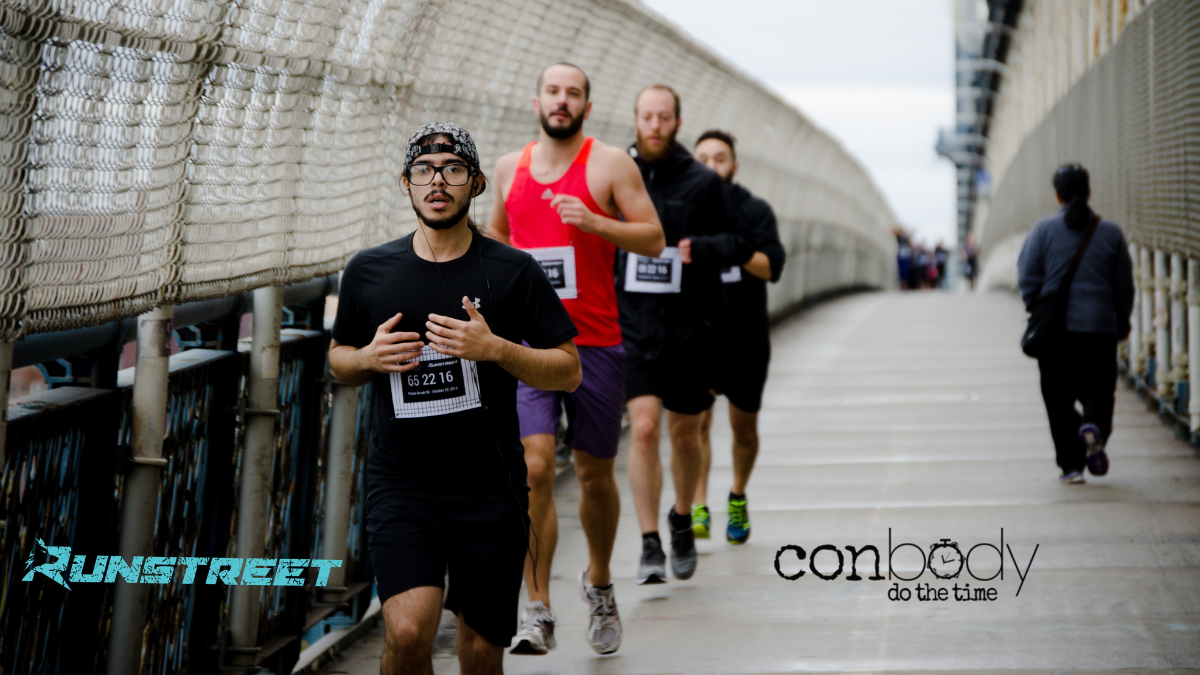
We partnered with Conbody to do a Prison Break 5K across the bridge.
Crowds & Vibe: Why Local Runners Love It
The Manhattan Bridge is a local NYC runner favorite because it offers something rare in the city: miles of uninterrupted running with zero traffic lights or swarms of tourists stopping in their tracks. Because cyclists generally stay on their dedicated north-side path, the walkway offers a safe, predictable space for runners and walkers alike.
During peak marathon training season in the late summer and fall leading up to the NYC Marathon, you’ll see local run clubs, friends, and solo runners flocking to the bridge for mileage. Despite the extra activity, the foot traffic flows smoothly because everyone follows basic bridge etiquette, staying to the right and keeping in motion. Even better, the walkway features built-in viewing platforms that jut out from the path, giving anyone who wants to snap a photo or take a breath a dedicated spot to stop without disrupting the flow of traffic.
What to Expect: Navigating the Subway Train Noise
One caveat with the Manhattan Bridge running route is the noise from the B, D, N, and Q subway trains whirring by regularly. For most New Yorkers, it is just background noise that’s part of city life, but if you’re trying to hold a conversation or if loud noises bother you, it may be an issue. Wearing noise-canceling earbuds or bone-conduction headphones can drown out the screeching trains, just keep your volume at a level where you can still stay aware of other runners passing you on the walkway.
How to Access the Manhattan Bridge Pedestrian Walkway
Finding the entrance to the Manhattan Bridge pedestrian walkway can be a bit tricky if it’s your first time, as it is completely separate from the bike path entrance.
Entering Manhattan Bridge from Manhattan (Chinatown / Lower East Side)
The Manhattan entrance to the pedestrian path is located at the intersection of bustling Bowery and Canal Street in Chinatown. Look for the massive, ornate stone archway and colonnade at Manhattan Bridge Plaza.
Where to step onto the path: Walk on Bowery past the archway at Bowery and Canal toward the south side of the bridge structure (to your right if you are facing Brooklyn). Just past Canal and Bowery (between Bayard Street and Canal Street on Bowery), you will see a dedicated pedestrian ramp leading directly onto the elevated south walkway of the Manhattan Bridge.
Subway Access: Take the B or D train to Grand Street station (3 blocks away) or the N, Q, R, W, 6, or J/Z trains to Canal Street station (about 7 blocks away, depending on where you exit the subway).
Entering Manhattan Bridge from Brooklyn (DUMBO / Downtown Brooklyn)
The Brooklyn entrance sits on the border of DUMBO and Downtown Brooklyn at the intersection of Jay Street and Sands Street.
Where to step onto the path: The entrance is a wide, ground-level concrete ramp with stairs on the side right near the corner of Jay and Sands (on Jay Street between Sands Street and High Street). Follow the ramp as it curves up to meet the south side of the bridge structure.
Subway Access: Take the F train to York Street station (3 blocks away) or the A or C train to High Street–Brooklyn Bridge station (about 4 blocks away).
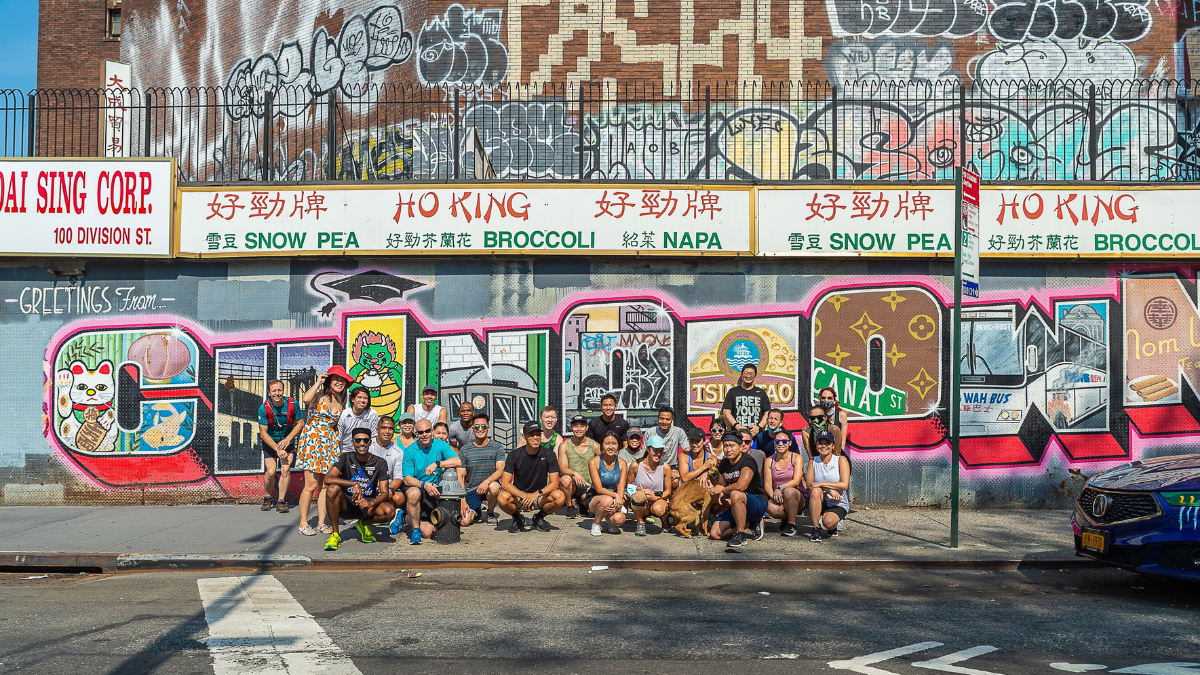
Runstreet Art Run in Chinatown to benefit W.O.W. Project NYC.
A Runner’s Practical Tips for the Manhattan Bridge
Gear & Tech: Wear supportive road shoes for the concrete path. If you want to block out the train rumbles, bring noise-canceling or bone-conduction earbuds to manage the subway noise while keeping spatial awareness.
Best Times to Run: Run early mornings or evenings at golden hour for cooler temperatures and stunning lighting over the East River.
Safety and Lighting: The path is well-lit for evening miles, but pack a lightweight reflective vest or clip-on light during late-night winter runs for extra visibility at the entrances.
Where to Refuel in Chinatown (Manhattan Side): Grab post-run steamed savory buns at Mei Lai Wah or treat yourself to a scoop from Chinatown Ice Cream Factory just a few blocks from the ramp.
Where to Refuel in DUMBO (Brooklyn Side): Grab a classic brick oven slice from Juliana’s Pizza or enjoy a post-run bite at Time Out Market New York right on the Brookyn waterfront.
Bonus: The Ultimate Manhattan & Brooklyn Bridge Two-Bridge Loop
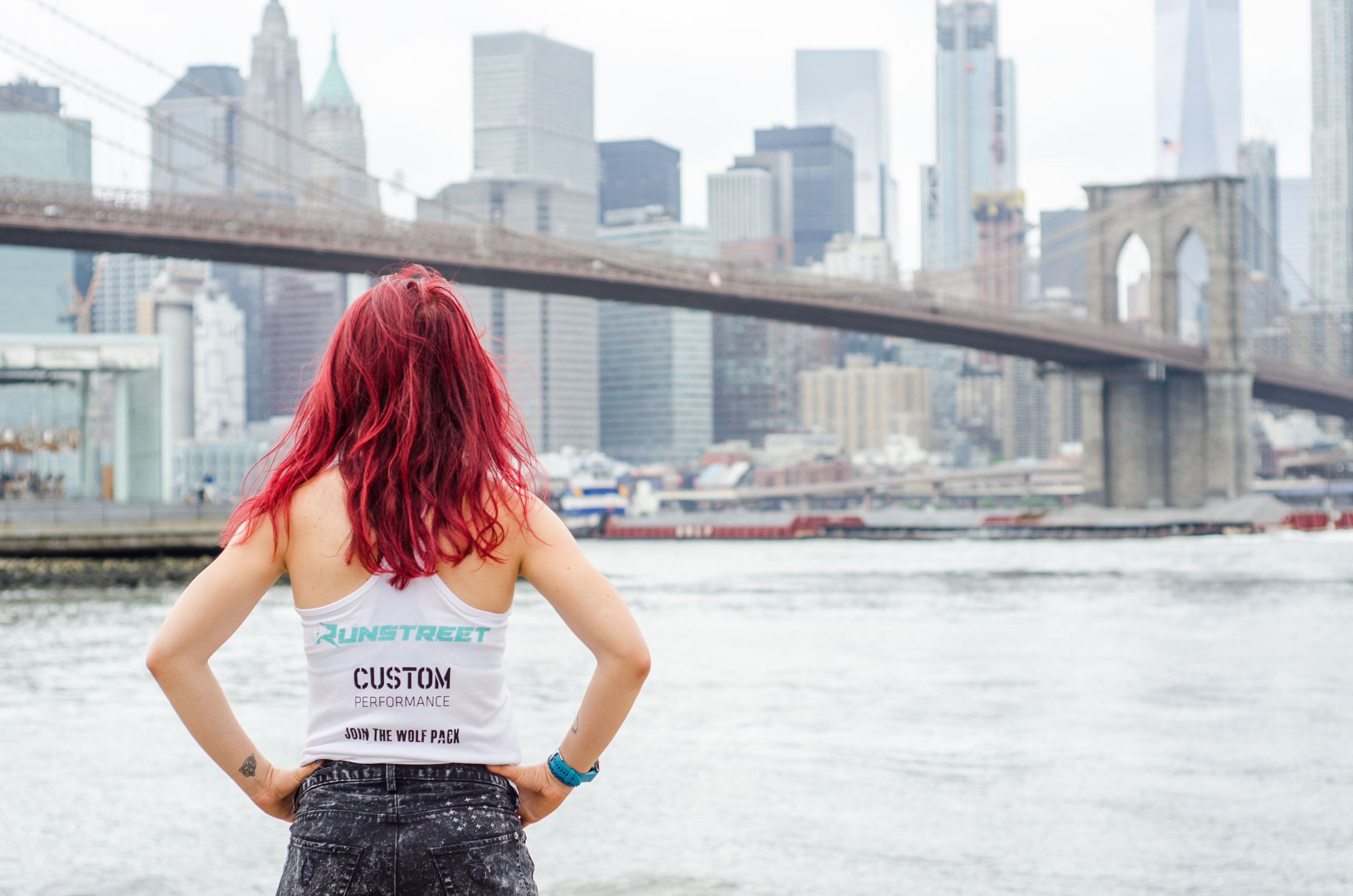
The Brooklyn Bridge adds incredible views to this running route.
If you want to double your bridge miles and experience two different vibes with stellar views in a single run, check out this two-bridge running route. It connects the Manhattan Bridge and Brooklyn Bridge into a 3-mile loop and is one of the most scenic NYC running routes. You can also easily add on miles for a longer run if you’re training for a half marathon or marathon.
Route Map & Distance (~3 Miles)
Total Distance: About 3 miles (just under 5 km) if you use the Washington Street entrance to the Brooklyn Bridge
Terrain: Wooden boardwalk planks (Brooklyn Bridge), paved concrete (Manhattan Bridge), and city sidewalks.
Starting Point: You can start at either bridge, but starting at the Brooklyn side of the Brooklyn Bridge will give you classic Manhattan skyline views and you can beat the crowds on the bridge if you start early, before 8 am.
Step-by-Step Directions for Running the NYC Bridge Loop
Begin at the Washington Street entrance to the Brooklyn Bridge (at Washington Street and Propsect Street). You will see signs for the pedestrian entrance to the bridge and stairs that lead up to the bridge.
Run across the Brooklyn Bridge into Manhattan. Stop for scenic photos if you’d like in the middle of the bridge. Everyone gets funneled off the Brooklyn Bridge at Centre Street by City Hall in Manhattan.
Turn right onto Centre Street in Manhattan. Run a few blocks, passing Foley Square on your left.
Turn right onto Worth Street and run a few blocks until you hit Bowery in Chinatown.
Turn left on Bowery. Run a few blocks and you will see signs for the pedestrian entrance to the Manhattan Bridge. Cross over to the right side of Bowery and on your right before you hit Canal Street, you’ll see the entrance ramp for the Manhattan Bridge.
Cross the Manhattan Bridge (Manhattan to Brooklyn): Follow the south pedestrian walkway 1.3 miles across the East River, enjoying the skyline views on your right, until you descend the ramp at Jay Street near Sands Street in Brooklyn. Run on Jay Street until you reach Prospect Street.
Turn left on Prospect Street. Run three blocks until you hit Washinton Street.
Complete the Loop. Once you reach Washinton and Prospect, you have completed the two-bridge loop.
Continue running down Washington Street toward the waterfront to add mileage to your run in Dumbo for more scenic views and waterfront running. Check out our guide to running in DUMBO for cobblestone navigation and waterfront detour ideas).
Frequently Asked Questions About Running the Manhattan Bridge
Is the Manhattan Bridge safe for running at night?
Yes, the Manhattan Bridge pedestrian walkway is well-lit and generally safe for running at night. Because it connects Chinatown and DUMBO—two high-foot-traffic neighborhoods—you will frequently see commuters, local runners, and walkers on the path during evening hours. As with any night run in the city, follow basic running safety tips like staying aware of your surroundings and keeping your headphone volume lower so you can hear passing traffic and other runners.
Which side of the Manhattan Bridge is for runners?
The south side of the Manhattan Bridge is designated strictly for pedestrians, runners, and walkers. The entrance in Manhattan is at Bowery and Canal Street, and in Brooklyn at Jay Street and Sands Street. Cyclists are required to use a completely separate path on the north side of the bridge, which keeps the south walkway safe and bike-free.
Is running the Manhattan Bridge harder than the Brooklyn Bridge?
Yes, most runners consider the Manhattan Bridge slightly more challenging than the Brooklyn Bridge. The Manhattan Bridge features a continuous, steady incline that climbs gradually all the way to the center span (~135 feet elevation gain), making it great for hill repeats. In contrast, the Brooklyn Bridge has a lower overall incline with a flatter middle section. However, the Manhattan Bridge’s smooth concrete surface and lack of tourist crowds often make it an easier, more consistent run.
About the Author
Marnie Kunz is a NASM-certified personal trainer and USATF- and RRCA-certified running coach based in Brooklyn, NY. Marnie loves helping people get and stay active to enjoy a better quality of life. When she's not coaching or exploring NYC routes, she enjoys spending time with her crested gecko.
